Viking Refrigerator Repair
Viking Refrigerator Repair Cost: What Shapes the Bill
A Viking refrigerator repair typically runs $280–$680 for a fan or defrost fault and $1,100–$2,450 for compressor or sealed-system work, after a flat $95 diagnostic visit. Here is what moves the price inside each range and when replacing is the better call.
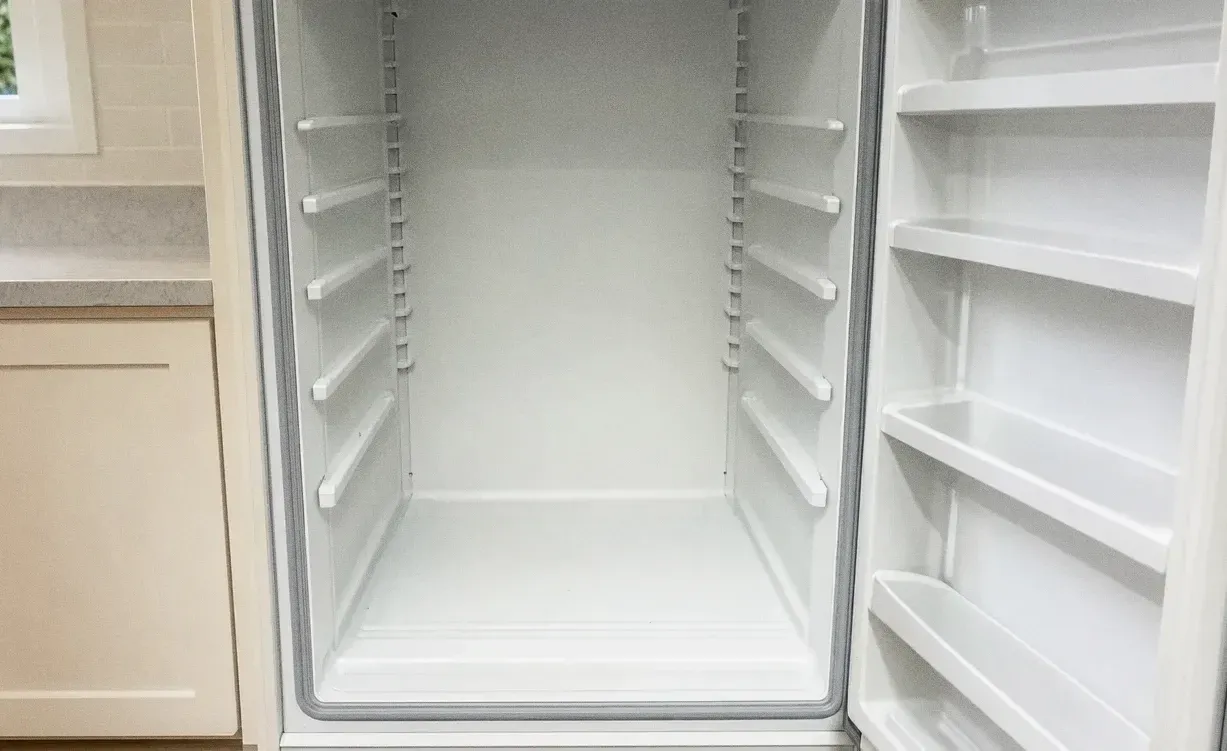
Most Viking refrigerator repairs fall into one of three typical price bands, and the band is set by the part that failed: $280–$680 for a fan or defrost problem, $380–$940 for a control board or touch panel, and $1,100–$2,450 when the compressor or another piece of the sealed system needs work. Before any of that, a flat $95 visit covers the trip and a full diagnosis, and you get that $95 back as a credit against the repair if you decide to proceed. The firm number only comes after the fault is found, because one symptom, such as a warm fresh-food section, can trace back to a seized fan motor or to a slow refrigerant leak.
The stakes are higher on a built-in than on a freestanding fridge. A Viking that sits flush in a run of cabinets is part of the kitchen itself, so the useful question is rarely what a repair costs on its own. It is whether paying for that repair beats pulling out an expensive unit and finding something that fits the same opening.
Why one symptom can carry very different prices
A Viking built-in cools with a compact sealed system tucked behind a cabinet-depth box. A fan pushes air across a cold evaporator coil, frost slowly collects on that coil, and a heater melts it off at intervals. When the heater, its thermostat or the fan gives out, the coil packs with ice, air stops moving, and the fresh-food side warms up while the freezer may still feel cold. Because of that layout, airflow and defrost faults tend to show up long before anything goes wrong with the compressor, and they belong to the cheaper band.
The picture changes when the compressor hums and runs for hours yet neither compartment gets properly cold, or when it clicks and refuses to start at all. Those signs point toward the sealed system or the electronics that drive it, and the likely cost moves up a tier. A few clues are worth noting before the visit: a thick layer of frost on the back wall of the freezer, water pooling under the crisper drawers, a fan that has gone quiet or started to rattle, and how long the problem has been building.
What each price band actually covers
Fans and defrost: $280–$680
This band includes the evaporator fan, the condenser fan, the defrost heater and the sensor or thermostat that tells the heater when to stop. Where a job lands inside the range depends on how many parts are involved and how much of the interior has to come apart. Reaching the coil can mean emptying the freezer, removing drawers and a rear panel, and melting a block of ice before testing can even start.
Control board or touch panel: $380–$940
The electronic controls decide when the compressor, fans and defrost heater run. A failing board can look exactly like a mechanical fault, which is why it gets tested before one is ordered. Electronic parts are often non-returnable once installed, so guessing here is the most expensive mistake a homeowner or a technician can make.
Compressor or sealed system: $1,100–$2,450
This covers a compressor replacement, a leak in the evaporator or condenser, a new filter drier and a fresh refrigerant charge. The work involves brazing, pulling the system into a deep vacuum, charging by weight and then watching temperatures settle, so it takes the most time of any refrigerator repair. The location of a leak and which component failed decide where in the range the bill ends up.
Labor, access and parts: the costs you do not see
On a built-in, getting to the problem is a real part of the job. Some repairs can be done from the front or through the grille, but others mean sliding a heavy unit out of a tight cabinet opening, disconnecting the water line for the ice maker, releasing anti-tip brackets and protecting the floor along the way. That access time is part of why the same failed part can cost more on a Viking than on an ordinary fridge.
Parts matter too. Viking components are specific to the brand and are not on the shelf at every supply house, so a repair that needs factory-approved parts may take two visits: one to diagnose and order, one to install. Either way, you hear what failed and which part it needs before you commit to anything. You can read more about how we handle these units on our Viking refrigerator repair page.
Why Viking refrigerators cost so much to begin with
Plenty of people ask why these fridges are priced the way they are. The short answer is that they are built to disappear into the kitchen: cabinet-depth bodies, stainless or panel-ready doors, heavy hinges sized for that weight, and production runs far smaller than those of mass-market brands. A comparable Viking unit typically runs $7,030–$11,360 for the appliance alone, before removing the old one, delivery, installation and any trim or cabinet changes if the new model’s dimensions do not quite match.
Those same qualities push repair costs up. Brand-specific parts cost more than generic ones, and a built-in takes longer to open up than a freestanding box. Still, the gap between the repair bands and that replacement figure is large, which is the core of the next decision.
Repair or replace: a practical way to decide
A fan, defrost or control repair is a small fraction of what a new built-in costs, and even a sealed-system job near the top of its range sits well below the lowest replacement figure. For most Viking owners, then, repair is the sensible first choice. Replacement becomes reasonable when the fault is only one of several problems: door gaskets that no longer seal, sagging hinges, a cracked liner, or a sealed-system failure on a unit that has already had major work. Ask for the diagnosis in writing so you can weigh those things with real information rather than a guess.
Keeping the next bill small
A little upkeep keeps the cheaper faults from turning into expensive ones. Vacuum the condenser coil behind the grille a couple of times a year, wipe the door gaskets so they seal fully, and avoid packing food against the vents inside. If you notice frost building on the freezer wall, call before unplugging the unit to thaw it, since a manual defrost hides the evidence a technician needs. Homes in Lexington Center, East Lexington, Countryside and Peacock Farm can reach us at (617) 300-0906 to set up a diagnostic visit.
Still asked
How much does a Viking refrigerator repair cost?
It depends on which part failed, and most jobs land in one of three typical ranges: $280–$680 for a fan or defrost fault, $380–$940 for a control board, and $1,100–$2,450 for compressor or sealed-system work. You get a firm price once the fault is diagnosed, and the $95 visit fee comes off the bill if you go ahead.
Is it worth repairing a Viking refrigerator instead of replacing it?
In most cases yes, because even a sealed-system repair at the top of its range costs far less than the $7,030–$11,360 a comparable Viking unit runs for the appliance alone. Replacing starts to make sense when the doors, hinges and cabinet are worn too, or when several major parts are failing together.
Why are Viking refrigerators so expensive?
They are designed to sit flush inside kitchen cabinetry, carry a lot of heavy stainless steel, and are made in much smaller numbers than mass-market fridges. The same traits explain why their parts cost more and why working on a built-in takes longer than working on a freestanding model.
What does the $95 service call pay for?
The $95 pays for the trip to your kitchen and a complete diagnosis, so you learn what broke and what fixing it will cost before anything is replaced. Approve the repair and that $95 is deducted from what you owe for it.
Why is my Viking freezer cold while the fresh-food side is warm?
That split usually means cold air has stopped reaching the fresh-food compartment, most often because the evaporator coil iced over after a defrost part failed or because the fan quit. Repairs of that kind normally sit in the $280–$680 fan and defrost range, not the compressor range.