Viking Refrigerator Repair
Viking Refrigerator High Temp Alarm: Silence It, Then Find the Cause
A Viking refrigerator high temp alarm means a compartment has stayed warmer than its setting for hours, not minutes. Press ALARM OFF to quiet it, check the doors, the power history and the condenser, then watch whether the temperature falls back.
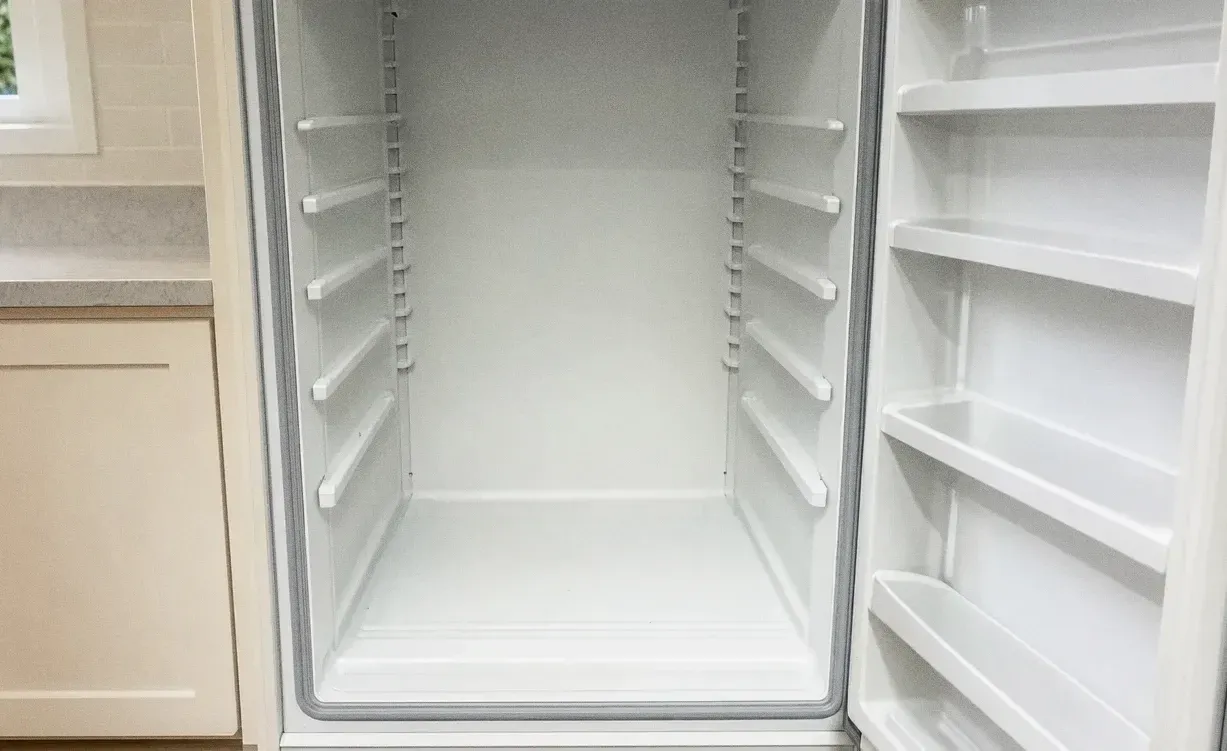
A Viking refrigerator high temp alarm means one compartment has run warmer than its setting for a long stretch, not that a door was left open for a minute. On 5 Series built-ins the HIGH TEMP light comes on only after a section has been too warm for two hours, so by the time you hear it the problem has been building for a while. Press ALARM OFF to quiet the tone, drop a fridge thermometer into a cup of water near the centre of the main compartment, and check the doors, the power history and the condenser before you assume a part has failed.
That order matters in a built-in kitchen. A cabinet-depth Viking breathes through a narrow grille and has little spare cooling capacity, so a door held ajar by a pizza box or a dusty grille can push a healthy machine into an alarm.
What the alarm is measuring on your model
Viking does not use one rule across every line, which is why online advice often conflicts. Find the model on the rating plate inside the fresh-food compartment and match it below.
5 Series built-ins keep three separate warnings. DOOR OPEN starts blinking when any door is left open past the three-minute mark. HIGH TEMP glows when a compartment has stayed too warm for two hours. A flashing POWER light says the unit lost power at some point. ALARM OFF clears each of them.
The RVFFR336 French-door model watches its freezer closely. After the first 72 hours from start-up, it raises the High Temp Error icon and alarm if the freezer warms to 28°F (-2.2°C) and then fails to get back under 16°F (-9°C) inside 12 hours. While the error is active, the display swaps between the set temperature and the highest one it recorded. That second number is a clue: near room temperature points to a long outage, while the twenties suggest a door or airflow problem.
Integrated columns such as the VRI7240, VRI7300 and VRI7360 sound a High Temperature Alarm and flash the display. Pressing ALARM mutes the sound, but the flashing carries on until the compartment is back to normal. That is deliberate, and it is why many owners think the reset failed.
Silence it, then work through the free checks
Muting the tone is safe on every model; fixing the cause is what ends the alert. After each change, give the refrigerator a few hours with the doors shut before judging the result.
- Doors and gaskets. Close every door and drawer firmly and look along each gasket for a gap, a fold or crumbs. A drawer riding on a bag of produce or an overloaded door bin is the usual culprit, and Viking’s RVFFR336 manual names door closure and sealing first.
- Recent power loss. A flicker during a storm, a tripped breaker or electrical work on the panel all let the cabinet warm. On integrated models the power-loss notice stays on the screen until you press any key.
- A big shop or a hot pot. A full load of groceries or a pot of stock put away warm can hold a compartment up for hours. That alarm is temporary.
- The condenser. A dusty coil cannot shed heat. Viking suggests cleaning it every 6 months.
- Vents inside the cabinet. Cold air reaches each section through small ducts. A tray or bag pressed against the rear panel can starve one compartment while the other stays cold.
On integrated units such as the FDBMIC7360, a CHECK COND. message is the cleaning reminder. Hold ON/OFF for about 3 seconds to shut the unit down, wait roughly 30 minutes, take off the grille under the door, vacuum the coil gently with a soft brush attachment, then restart and reset the reminder. On the VRI columns a blinking CL means the same thing; once the coil is clean, hold the up and down arrows together for 3 seconds to clear it.
Codes that sit next to the temperature alarm
Several Viking messages look like a temperature warning but mean something narrower.
| Code or light | What it means | What you can check | When to call |
|---|---|---|---|
| DOOR OPEN or Upper unit open | A door has been open a few minutes | Close it, inspect the gasket | If it shows with every door shut |
| Flashing POWER | Power was lost | Press ALARM OFF, watch it recover | If it repeats with no outage |
| CL or CHECK COND. | Condenser cleaning reminder | Clean the coil, reset | If the alarm follows a clean coil |
| SHOW | Showroom mode, no cooling | Exit showroom mode | If it will not exit |
| oPn or Shr | Temperature sensor alarm | Press ALARM OFF once | At once if the code stays |
| HH or LL | Far above or below setting for a long time | Doors and power | Viking says contact service |
HH and LL belong to the VRUI524 undercounter refrigerator and the VBUI515 beverage center. The oPn and Shr codes come from 5 Series built-ins, and Viking is direct about them: if ALARM OFF does not bring the temperature reading back, call a technician immediately, because the control can no longer trust its own sensor.
SHOW deserves its own warning. In showroom mode the controls and lights work but the refrigeration system does not. Leaving it on a 5 Series is a three-button move: with ACTIVATE CONTROLS pressed, tap HIGHER and ALARM OFF together and wait for three beeps. On the VRI integrated columns the mode is toggled by holding VAC and ALARM for 3 seconds, and while it is on no fault codes appear at all, so a warm cabinet with a silent alarm is worth checking for this first.
Why the alarm keeps coming back
If the doors seal, the power has been steady, the coil is clean and the alarm still returns within a day, the refrigerator is not removing heat fast enough, usually for one of three reasons.
Evaporator fan or defrost. Frost spreading across the back wall of the freezer, a fresh-food side that warms while the freezer stays cold, or a fan you can no longer hear when you hold the door switch in all point here. A failed defrost heater or sensor lets ice choke the coil. Work on the refrigeration fan or defrost system typically runs $280–$680.
Control or sensor. A board or sensor that misreads temperature can trigger the alarm on a cold cabinet or, worse, let a warm one run quietly. Control board or touch panel repairs typically fall between $380–$940.
Sealed system. When the compressor runs without stopping, the coil is clean and both compartments drift up together, the refrigerant circuit itself is the suspect. This is the costly end, typically $1,100–$2,450, where weighing repair against replacement makes sense. Our guide to what shapes a Viking refrigerator repair bill walks through that decision.
Each of those is a typical range; the firm figure comes once the diagnosis is done.
Getting a diagnosis in Lexington
Viking Repair Lexington is an independent service using factory-approved parts, looking after Viking refrigeration in Lexington Center, Countryside, East Lexington and Peacock Farm. The $95 visit fee covers the drive out and the whole diagnosis; if you approve the repair, that $95 is subtracted from its total. Call (617) 300-0906 with the model, the code on the display and your thermometer reading. More on how these units are handled is on our Viking refrigerator repair page.
Until then, keep the doors closed, move the most perishable food to a cooler with ice if the thermometer reads above 40°F, and leave the alarm muted rather than switching the unit off.
Still asked
Why does my Viking refrigerator keep beeping about high temperature?
It keeps beeping because a compartment is still warmer than the control will accept, so muting the tone does not end the alert. On the integrated VRI7240, VRI7300 and VRI7360 the display keeps flashing until the cabinet is back to normal, and on the RVFFR336 the alarm returns if the freezer is not below 16°F within 3.5 hours. Look first for a door that is not sealing, a recent outage or a dusty condenser.
How do I reset a Viking refrigerator high temp alarm?
Press ALARM OFF, or the ALARM button on integrated models, to silence it; there is no other reset an owner needs. The warning clears on its own once the compartment cools back to its setting. If it keeps returning, the cause is still there and the refrigerator needs a diagnosis rather than another button press.
Is my food safe after the high temp alarm went off?
Check it with a thermometer before deciding. Perishables kept warmer than 40°F for over two hours are generally safer thrown away, according to standard food safety guidance. Frozen food that still carries ice crystals, or reads 40°F or colder, can generally be refrozen, though texture may suffer.
Why did the alarm go off after a power outage?
The cabinet warmed while the refrigerator had no power, so the alarm is reporting something real that has already happened. On 5 Series built-ins a flashing POWER light marks the outage separately, and on integrated models the power-loss notice stays up until you press any key. Keep the doors shut and give it several hours to recover.
When should I call a technician about a Viking high temp alarm?
Call when the alarm comes back within a day even though the doors seal, the power has been steady and the condenser is clean. Call right away for oPn or Shr that will not clear, or for HH or LL, because Viking directs owners to service for those codes.